
Home > Gearmotors
Gearmotors find application in a multitude of distinct industries, spanning from robotics and conveyor systems to medical equipment and industrial food machinery. Renowned for their exceptional stability and precision in positioning, gearmotors showcase remarkable resistance to load torque fluctuations.
TelcoMotion provides reliable power transmission, crucial for the seamless operation of numerous systems integral to our daily lives. Irrespective of the nature of your project, we offer a range of standard models as well as customized gearmotor solutions tailored to the needs of OEMs, effectively transforming designs into reality.
With a wealth of expertise spanning over four decades across diverse industries, you can place your full trust in us to provide gearmotor solutions that epitomize quality, efficiency, and reliability, driving the power behind your operational excellence.
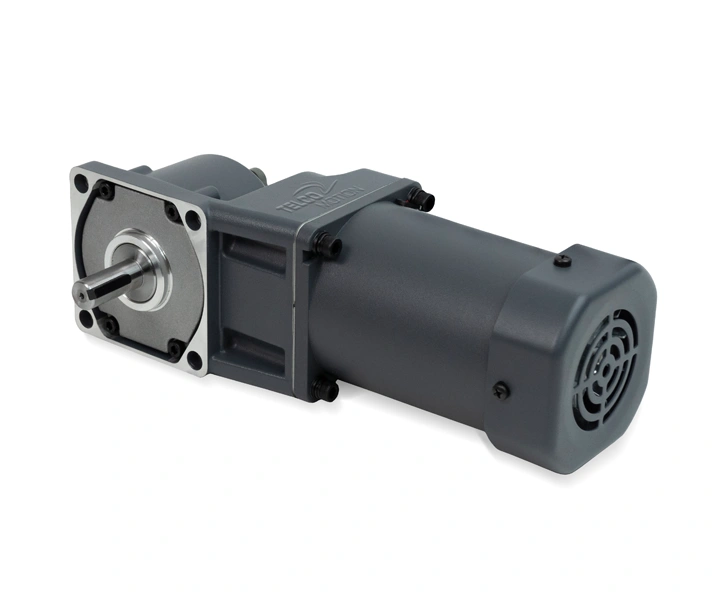
Right angle gearmotors are an exceptionally versatile motor variant, providing a reliable and cost-effective way to power a multitude of applications. Leveraging right angle gearing technology, they efficiently transmit power from the motor shaft directly to the output shaft of the application, negating the necessity for supplementary gearing components.
TelcoMotion’s right angle gearmotors are ideal for applications that necessitate compact power transmission where space is limited.
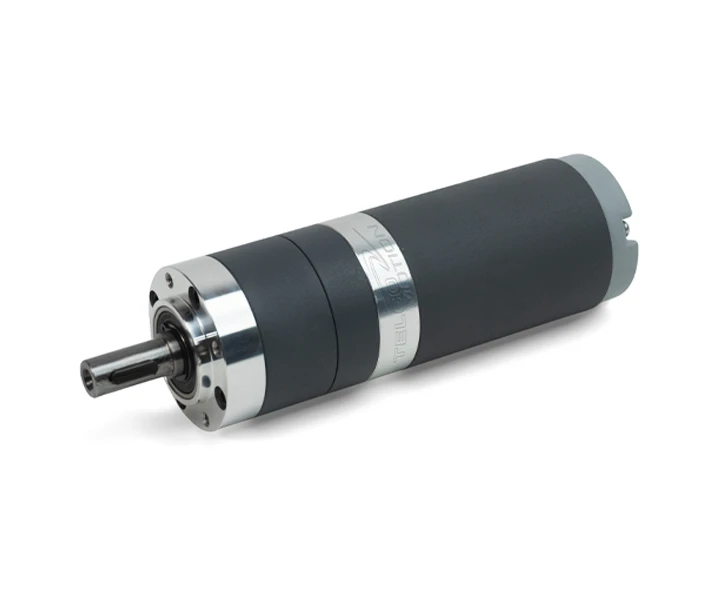
Planetary gearmotors are an increasingly popular type of motor used in various applications. These motors combine the power and speed of traditional electric motors with the torque and efficiency found in planetary gear systems to create an efficient, powerful unit.
As an industry leader in power transmission components, you can trust TelcoMotion for comprehensive OEM and ODM planetary gearmotors that last.
A popular industrial power transmission component – the parallel shaft gearmotor – assembles two or more gear sets with an AC or DC motor driving them. The most common types are:
TelcoMotion boasts an extensive and trustworthy inventory of these components, encompassing a wide spectrum of applications.
Any lingering questions about AC motors? We’ve got answers.
A gearmotor is made up of a motor, gear, and bearings enclosed in a housing, and is frequently used in applications that require a high amount of force (torque) at low speeds. A gearmotor (or geared motor) is a small electric motor (AC induction, permanent magnet DC, or brushless DC) designed with an integral (non-separable) gear reducer (gearhead) attached.
How Gearmotors Function
The primary function within a gearmotor is handled by the gear unit and its stages, which transfer the force of the motor from its input to its output, functioning as a speed and torque converter. The gearing takes the high speed, low torque power from the motor and converts it to low speed, high torque power through a gear reduction ratio, like 10:1 or 50:1, which determines the torque multiplication.
With a 10:1 ratio, a 1000 RPM input speed becomes 100 RPM at the output, but the torque is increased by a factor of 10—so a 2 Nm motor becomes 20 Nm at the output shaft after going through the 10:1 gear reducer. Higher gear ratios like 100:1 or 500:1 can drastically increase torque for operating heavy loads while keeping motor size small.
Key Advantages
In general, gearmotors function as torque multipliers and speed reducers, requiring less motor power to drive a given load. Gearmotors eliminate the need for motor/gearhead couplings and eliminate any potential bearing alignment problems, common when a motor and gearhead are bolted together by an end-user
Understanding Gear Ratio
The gear ratio is the ratio of the number of teeth of the driven or output gear and the driver or input gear, and is used to calculate the speed and torque of the output shaft when input and output shafts are connected using a gear train. The gear ratio helps us determine the number of teeth each gear needs to produce a desired output speed/angular velocity, or torque.
Speed Calculation
The relationship between gear ratio and gear rpm is given as: Output gear rpm = Input gear rpm / Gear ratio. For example, if you have an input speed of 1800 RPM and a gear ratio of 30:1, your output speed would be 60 RPM.
Torque Calculation
If the input torque is known, we can calculate the output torque by multiplying the input torque with the gear ratio. Once we understand how the speed is reduced through the gear chain, calculating the transfer of torque is simple: it is the inverse of the speed ratio—as the output speed of the gear chain decreases, the system can deliver more torque.
The gearbox output torque calculation formula is: Gear Reducer Torque = 9550 × Motor power / Rated Power motor’s input revolution × Ratio × gear reducer efficiency. This formula accounts for motor power, input speed, reduction ratio, and gearbox efficiency to determine actual output torque.
Important Considerations
It is important to recognize that the effect of gearing on speed is the inverse of its effect on torque—if as a result of the gear arrangement the torque increases, the rotational speed decreases. This fundamental relationship means you cannot simultaneously increase both speed and torque with gearing alone.
Worm Gearmotors
Worm gearmotors use a worm gear to transfer power, which provides high torque output and low-speed operation, and are ideal for applications that require a high reduction ratio, such as in mixers, conveyors, and bottling plants. They can provide very high reduction ratios and are more compact than other gear types, and they’re typically self-locking which makes them ideal for hoisting and lifting applications.
One advantage that worm drives have over traditional gearboxes is that the worm can turn the gear, but the gear cannot turn the worm, thus creating a brake, though the downside is efficiency—average efficiency of a worm drive is around 65%.
Helical Gearmotors
Helical gearmotors feature helical gears that are angled to reduce noise and improve efficiency, and are ideal for applications that require high precision and low noise levels, such as conveyor systems, cranes, and hoists. Helical gearboxes are known for their higher efficiency compared to worm gearboxes—the helical gear design allows for more teeth engagement, resulting in reduced friction and energy losses during power transmission.
The helical gear design also offers smoother and quieter operation because the angled teeth of helical gears allow for gradual tooth engagement, reducing noise and vibration levels.
Planetary Gearmotors
Planetary gearmotors use planetary gears to transfer power, which provides high torque output and low-speed operation, and are ideal for applications that require a high reduction ratio and compact sizes, such as in robotics, medical equipment, and automation. The planetary gearbox offers several advantages, including high torque density, compact size, and high efficiency—the multiple gears in the system distribute the load evenly, resulting in a higher torque output than other types of gearboxes.
Planetary gearboxes can handle extremely large reductions with good load distribution, giving huge torque capability and high efficiency, with a general loss of only 3% per train.
Helical-Worm and Helical-Bevel Gearmotors
Adding in a helical gear stage means that significantly higher efficiency can be achieved than when using plain worm gear units, and the linear power transmission makes helical-worm gear units exceptionally smooth-running and low-noise. Helical bevel gearmotors consist of a motor and a gearbox that contains both helical and bevel gears, providing high efficiency, precision, and flexibility in power transfer angles.
Different gear types in TelcoMotion gear motors have distinct characteristics that significantly impact efficiency, noise, and service life in continuous operation applications:
Spur Gear Technology:
Helical Gear Technology:
Planetary Gear Technology:
Worm Gear Technology:
Cycloidal Gear Technology:
All efficiency and service life metrics are based on proper installation, maintenance according to our guidelines, and operation within specified temperature ranges. For continuous operation applications specifically, our engineering team recommends either helical or planetary gear technologies, with the optimal choice depending on space constraints, precision requirements, and budget considerations.
Key Selection Factors
The main considerations for selecting the right gearmotor are: What speed or speed range is required for the application? How will the gearmotor transmit the speed/torque to the load? Where will the gearmotor output be oriented compared to the motor (inline or right angle)? What is the gearmotor’s required operating profile and duty cycle?
Torque and Speed Requirements
Torque is the force necessary to move a load—on a conveyor, the torque can be calculated based on the maximum load of material on the conveyor and the properties of the conveyor design, and the gearmotor must have the torque output required to start and move the conveyor belt and material at the appropriate speed.
Before selecting a geared motor, know the application requirements: identify the minimum and maximum amount of torque and speed, and what duty, control, and mounting are required.
Duty Cycle Considerations
It’s crucial to choose a gearmotor with a duty cycle that matches the application’s requirements to avoid overheating and premature failure—the duty cycle determines the gearmotor’s operating time and rest intervals. Understanding factors and duty cycle—the time on and time off required—is necessary to select the right gearmotor, and loads with high duty cycle, shock load, extreme operating temperature, and vibration should be addressed when selecting the solution.
Environmental Factors
Environmental factors such as temperature, humidity, and exposure to dust and debris can impact the gearmotor’s lifespan and performance, so it’s essential to consider the application’s operating environment when selecting a gearmotor and choose one with suitable protection ratings.
Service Factor
The service factor is the ratio of the gearbox rated horsepower (or torque) to the application’s required horsepower (or torque), and service factors are defined by the American Gear Manufacturers Association (AGMA), based on the type of gearbox, the expected service duty, and the type of application. Applying an appropriate service factor adds a safety margin and accounts for real-world operating conditions.
Helical gearmotors use angled gear teeth that mesh gradually, providing smooth, quiet operation with high efficiency (85-98%) and are ideal for high-speed applications. Planetary gearmotors feature multiple gears orbiting around a central sun gear, delivering exceptional torque density, compact size, and precise positioning with efficiency up to 97%. Worm gearmotors use a screw-like worm gear driving a wheel gear, offering high reduction ratios in compact packages with self-locking capability but lower efficiency (40-90%). Helical systems excel in continuous duty applications, planetary systems are best for precision and high torque needs, while worm gearmotors are preferred for positioning applications requiring holding torque.
Selecting the optimal gear ratio for TelcoMotion gear motors in food processing equipment requires balancing multiple factors specific to this demanding application area:
Application-Specific Selection Criteria:
Food Industry-Specific Considerations:
Practical Selection Example: For a cookie dough mixer application requiring 120 Nm output torque at 45 RPM with wash-down requirements, we would recommend our FG-Series helical gear motor with a 30:1 ratio coupled to a 1,350 RPM base motor. This configuration delivers 125 Nm continuous torque with >90% efficiency while maintaining the necessary IP69K rating for sanitary operations.
TelcoMotion precision gear motors offer various backlash specifications optimized for different positioning requirements in bidirectional applications:
Achievable Backlash Specifications:
| Gear Type | Standard Backlash | Precision Version | Ultra-Precision Version |
|---|---|---|---|
| Spur | 0.5° – 1.5° | 0.3° – 0.5° | Not available |
| Helical | 0.3° – 0.7° | 0.15° – 0.3° | 0.08° – 0.15° |
| Planetary | 0.25° – 0.5° | 0.1° – 0.25° | 0.05° – 0.1° |
| Harmonic Drive | Not applicable | 0.016° – 0.05° | <0.016° (arc-minutes) |
| Cycloidal | 0.2° – 0.4° | 0.1° – 0.2° | 0.05° – 0.1° |
Strategies for Bidirectional Positioning Applications:
For a recent semiconductor handling application requiring bidirectional positioning with ±0.01° repeatability, we implemented our precision planetary gearhead with dual encoder feedback, achieving consistent positioning regardless of approach direction while maintaining a service life of over 25,000 hours in 24/7 operation.
Gearmotors are essential across numerous industries including robotics (for joint actuation and precision positioning), conveyor systems (for material handling and packaging), medical equipment (for surgical robots, diagnostic equipment, and patient positioning), industrial food machinery (for mixers, conveyors, and packaging equipment), HVAC systems (for damper control and fan drives), building automation (for window operators and access control), automotive manufacturing (for assembly line equipment), and specialty vehicles (for electric bicycles, golf carts, and agricultural equipment). Their exceptional stability, precision positioning, and resistance to load torque fluctuations make them ideal for applications requiring reliable power transmission.
Selecting the right gearmotor requires evaluating several key factors: required output torque and speed, input power requirements and available voltage, duty cycle and operational environment, mounting configuration and space constraints, required positioning accuracy and repeatability, load characteristics (constant vs. variable), environmental conditions (temperature, humidity, contamination), and budget considerations. Start by calculating your torque requirements including safety factors, determine the required gear ratio based on motor speed and desired output speed, consider efficiency requirements for energy costs, and evaluate whether standard or custom solutions best meet your needs. TelcoMotion’s engineering team can assist with application analysis and selection optimization.
Planetary gearmotors offer several distinct advantages including exceptional torque density (high torque output in compact packages), superior precision and repeatability for positioning applications, high efficiency (typically 90-97%), excellent load distribution across multiple planet gears reducing wear, compact and lightweight design, low backlash for precise motion control, high input speed capability, and excellent durability under varying load conditions. These characteristics make planetary gearmotors ideal for robotics, medical devices, aerospace applications, and precision industrial equipment where space is limited but high performance is required. Their balanced design also results in smooth operation with minimal vibration.
Yes, TelcoMotion specializes in custom gearmotor solutions tailored to OEM requirements, transforming designs into reality with over four decades of industry expertise. Our custom capabilities include modified gear ratios for specific speed/torque requirements, custom mounting configurations and shaft options, specialized environmental protection (IP ratings, corrosion resistance), integration with encoders, brakes, and other accessories, custom motor winding for specific voltage/frequency requirements, and specialized materials for food-grade or medical applications. We work closely with OEMs from concept through production, providing engineering support, prototyping, testing, and full-scale manufacturing to ensure your gearmotor solution meets exact specifications and performance requirements.
Lubrication Maintenance
It is essential to follow the manufacturer’s recommendation for type of lubricant, and any modification in lubrication should occur only after a thorough technical study. Checking the oil level at the beginning and during operation is especially important, ensuring that the oil quantity in the component is adequate.
Typically, lubricants should be changed every 7,500 to 10,000 hours of operation or at least annually, though harsh operating conditions may necessitate more frequent changes. After the initial operation of the unit, AGMA recommends that oil be changed every 2500 hours of operation or every 6 months, whichever comes first.
Common Lubrication Problems
The two main problems with using lubrication oil with geared motor units are leakage and overheating, and these problems cannot always be avoided. The most common reasons for lubrication oil leaking during gear motor activity are: too much oil (lubrication oil becomes very agitated during operation), worn seals or gaskets, or loose mounting bolts.
The primary failure with lubrication is poor maintenance—maybe the oil isn’t getting changed regularly, oil and grease has been mixed, or the lubrication has been contaminated in some way.
Monitoring and Inspection
Condition monitoring programs evaluate changes in operating parameters and provide valuable quantitative data that can help forecast when failures might occur—oil temperature, level, and condition, vibration, noise and physical condition of seals and breathers are some of the parameters that should be monitored.
The breather must be installed and fixed correctly, as proper ventilation prevents pressure buildup and moisture accumulation inside the gearbox.
Advanced Maintenance Techniques
Vibration analysis allows problems to be detected at an early stage by monitoring the vibrations generated by machines—an abnormal increase in vibration can indicate unbalances, misalignment, looseness, excessive wear or other potential problems that could lead to equipment failure. Thermography is another valuable technique used in gearmotor predictive maintenance, based on detecting temperature differences on the surface of an object or piece of equipment to identify possible problems and anomalies.
Overheating Issues
Overheating oil can be caused by: too much oil (over-lubricating causes the generation of more heat than necessary), wear and tear on gears, teeth or bearing cages, old oil with inconsistent properties, or dust and debris accumulating on components affecting heat dissipation capabilities.
Temperature is typically the first indicator that something is going wrong—when temperature climbs up fast and doesn’t stabilize, this can be terrible for your gearbox. Relatively slow speed gears will not generally be subjected to overheating from churning or internal heat buildup from friction, but faster applications require careful viscosity selection.
Bearing Failures
A worn bearing may cause uneven wear on gear teeth, but prolonged operation in this condition can lead to more severe conditions resulting in broken gear teeth which can feed to other gears in the train and cause damage to more components that might not have otherwise required replacement.
Lubrication Film Breakdown
Oil must flow properly to achieve proper lubrication—if the oil is too thick, the oil will not properly flow between the mating teeth, and if the oil is too thin, the film thickness will not be adequate, with both conditions resulting in metal-to-metal contact between gear teeth and initiation of premature failure.
The gearbox will experience lubrication issues if the oil selected is not viscous enough or if the gear speed (pitch line velocity) is too high—in this case, centrifugal force will not allow enough oil to remain on the gear to produce an adequate film thickness.
Misalignment Problems
Gearmotors eliminate any potential bearing alignment problems, common when a motor and gearhead are bolted together by an end-user—misalignment can result in bearing failure due to fretting corrosion.
Warning Signs
Warning signs include increased noise or vibration, which could indicate lubrication breakdown or contamination. Regular monitoring of these parameters can help identify problems before they lead to catastrophic failure.
Efficiency Comparison
Helical gearboxes are more efficient than worm gearboxes—there will be less wear and tear in a helical gearbox as the load will be distributed between several teeth, while in a worm gearbox, the surface is subject to wear because of friction. The planetary gearbox is more efficient than the worm gearbox due to the multiple gear engagements, resulting in less energy loss.
Torque and Load Capacity
Helical gearboxes have a higher load-carrying capacity compared to worm gearboxes—the inclined tooth design enables multiple teeth to be in contact at any given time, distributing the load across a larger contact area. The gear ratio of the planetary gearbox is higher than that of the worm gearbox, making it suitable for applications that require a high torque output.
Size and Compactness
The planetary gearbox is more compact than the worm gearbox, making it suitable for applications where space is limited. Worm gears can provide very high reduction ratios and are more compact than other gear types for achieving large speed reductions.
Special Features
The worm gearbox is self-locking, preventing the system from backdriving, while the planetary gearbox is not self-locking. Worm gears provide very quiet operation so they’re suitable for use where noise should be minimized, like in elevators.
Cost Considerations
Helical gearboxes are generally more expensive than worm gearboxes for the same HP and gear ratios—a worm gearbox may be a better option in low HP applications as it is much cheaper. One of the disadvantages of the planetary gearbox is its complexity—the system of gears requires precise manufacturing and assembly, making it more expensive than other types of gearboxes.
Application Recommendations
For high torque at low speed, worm gears are the best option due to their high reduction ratios and compact size; for high efficiency and compactness, planetary gears are the preferred choice; for high torque at larger speeds and smooth operation, helical gears are perfect.
Environmental conditions significantly impact gearmotor selection including temperature extremes requiring special lubricants and materials, humidity and moisture requiring appropriate sealing (IP65/IP67 ratings), corrosive chemicals demanding stainless steel or special coatings, food processing environments requiring washdown-capable designs and food-grade lubricants, dusty conditions needing enhanced filtration and sealing, vibration and shock requiring robust mounting and internal components, and explosive atmospheres requiring ATEX or Class I Division 1 certification. TelcoMotion designs gearmotors for specific environmental challenges, selecting appropriate materials, sealing methods, and protection levels to ensure reliable operation in demanding conditions.
TelcoMotion maintains rigorous quality standards including ISO 9001:2015 certification, comprehensive incoming material inspection, precision gear manufacturing with tight tolerances, complete assembly testing including torque, speed, and efficiency verification, environmental testing for temperature cycling, humidity, and vibration resistance, noise level testing and optimization, endurance testing under rated loads, and final quality inspection before shipment. We also provide custom testing protocols for specific applications, maintain complete traceability documentation, and offer extended warranties for critical applications. Our quality systems ensure consistent performance and reliability across both standard and custom gearmotor solutions.
TelcoMotion gearmotors are engineered to provide optimal cost-versus-performance balance through efficient design, quality manufacturing, and appropriate technology selection for each application. While initial costs may be higher than commodity alternatives, TelcoMotion gearmotors typically deliver lower total cost of ownership through higher efficiency (reducing energy costs), longer operational life (reducing replacement costs), lower maintenance requirements, and superior reliability (minimizing downtime costs). Custom solutions optimize performance for specific applications, often eliminating the need for oversized components or additional mechanical elements, resulting in overall system cost savings and improved performance.
Why settle for less? Put Telco’s motion control and supply chain experts to work on your next project.
Whether you need more efficient solutions or engineering innovation, our engineers are up to any challenge.
Office: (281) 855-2218
Copyright © 2025 Telco Intercontinental Corp. All rights reserved. Privacy Policy | Legal Disclaimer
Telco®, TelcoMotion®, and TelcoGreen® are registered trademarks of Telco Intercontinental Corp.
