+1 (281) 855-2218

AC Motors

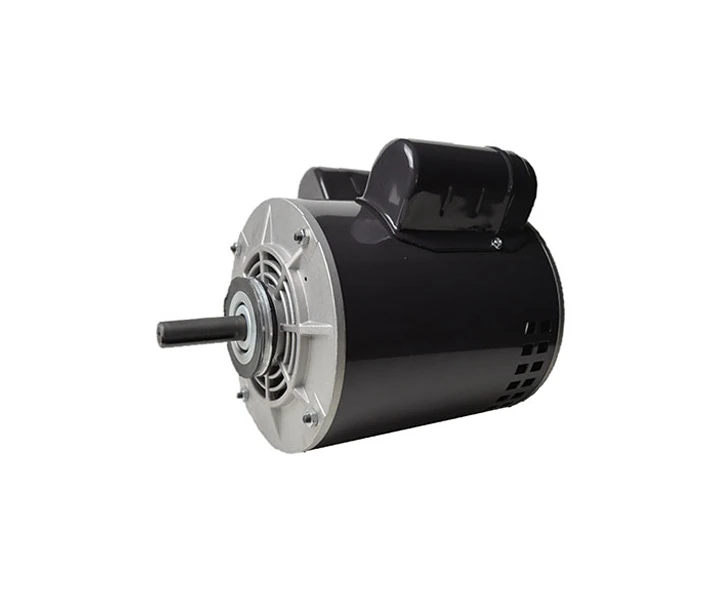
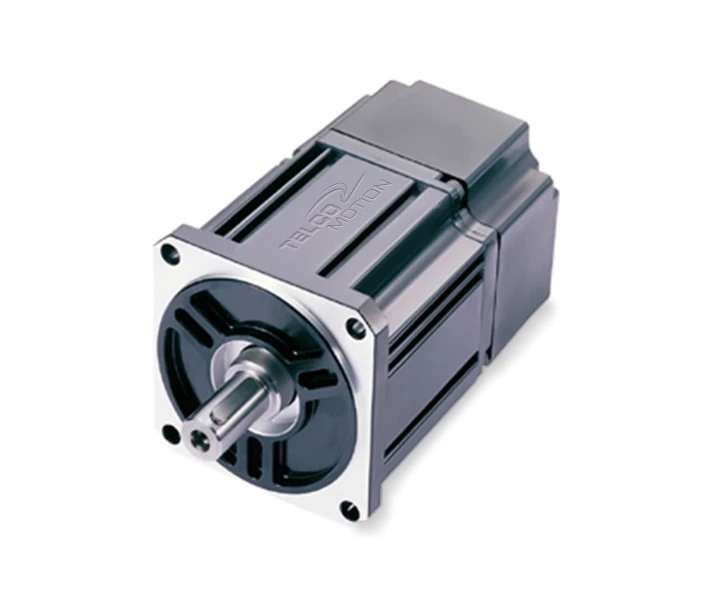
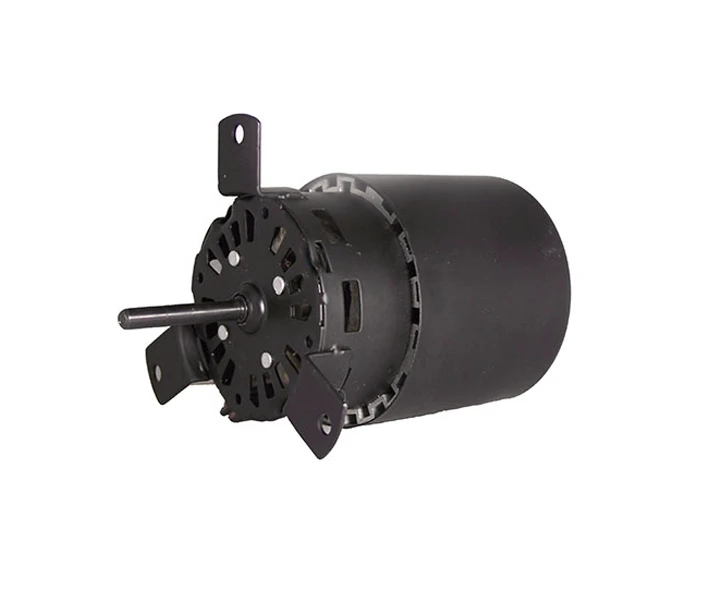
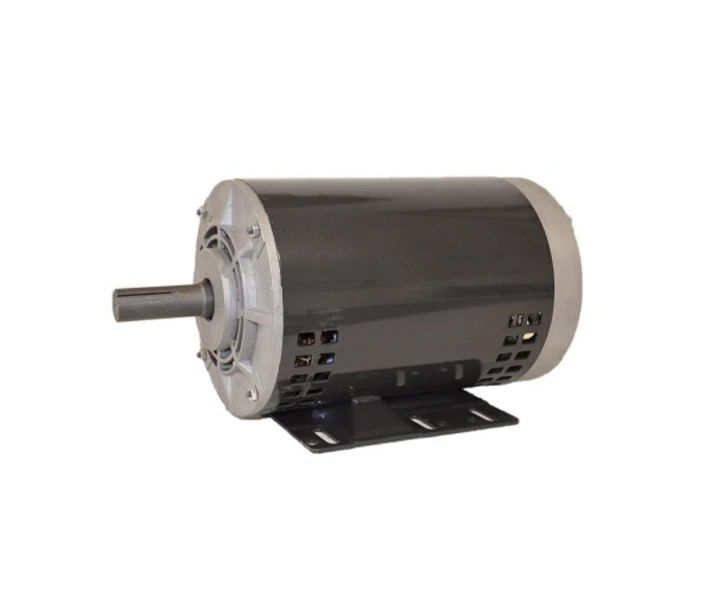
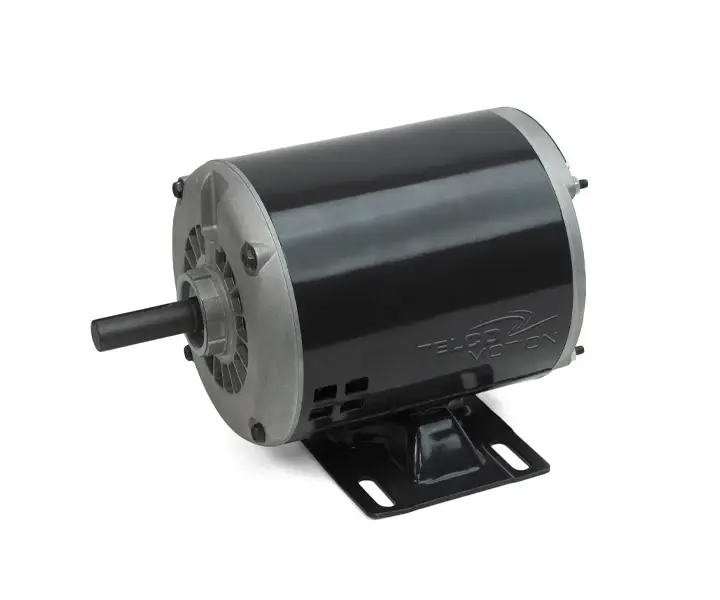
AC motors play a vital role in keeping the modern world moving. They are used everywhere – from large industrial machines to consumer appliances and electric vehicles.

TelcoMotion is a top name in AC motor technology, offering a wide range of high-performance options designed to meet the demands of any application. We offer AC motors in frame sizes ranging from 1.77” to 4.53” with output power from 6 W to 2200 W.

Trust TelcoMotion for Quality AC Motors of All Kinds

The quality of an AC motor depends on the materials used, the design and construction of its components, and the quality control measures taken during its production. TelcoMotion takes these factors seriously when designing and manufacturing our AC motors. Our tightly monitored production process ensures consistency in performance you can rely on.

AC Motors FAQ

Any lingering questions about AC motors? We’ve got answers.

Premium efficiency AC motors from TelcoMotion deliver 2-8% higher efficiency than standard models, translating to significant energy savings in continuous operation applications. Our premium models exceed NEMA Premium® and IE3/IE4 efficiency standards with specially designed lamination steel, optimized copper windings, and precision manufacturing. For example, our 10HP premium models operate at 91.7% efficiency compared to 89.5% in standard models, generating less heat and offering extended service life (typically 15+ years vs. 7-10 years for standard efficiency motors). This improved performance is particularly valuable in applications with duty cycles exceeding 6,000 hours annually, where ROI on premium motors is typically achieved within 12-24 months depending on energy costs.

Selecting the optimal AC motor frame size and mounting configuration requires consideration of several application-specific factors:

  1. Space constraints: Measure the available envelope dimensions in your application, including length, width, height, and shaft alignment requirements.
  2. Mounting orientation: Determine whether your application requires foot mounting (standard NEMA frames 42-449), face mounting (C-face or D-flange), or specialized mounting like vertical shaft-down configurations.
  3. Environmental conditions: For harsh environments, consider our TEFC (Totally Enclosed Fan Cooled) or TENV (Totally Enclosed Non-Ventilated) options with appropriate IP ratings (IP54-IP66).
  4. Integration requirements: Consider electrical connection points, thermal dissipation requirements, and accessibility for maintenance.
  5. Standardization: TelcoMotion offers standard NEMA frame sizes (42, 48, 56, 143T-449T) with interchangeable mounting dimensions to ensure compatibility with industry standards.


What methods are available for controlling speed in TelcoMotion AC motors, and which is most suitable for variable-load applications?For precise sizing, our engineering team performs application-specific calculations accounting for starting torque, moment of inertia, and load characteristics to prevent over/under-sizing which could impact both performance and cost-efficiency.

TelcoMotion offers several speed control methods for AC motors, with varying suitability for variable-load applications:

  1. Variable Frequency Drives (VFDs): Our recommended solution for variable-load applications, providing precise speed control from 0-120% of base speed while maintaining torque characteristics. TelcoMotion VFDs feature vector control algorithms that adjust frequency and voltage simultaneously to maintain optimal motor performance across varying loads. Energy savings of 20-50% are typical when compared to fixed-speed operation with mechanical flow control.
  2. Multi-speed windings: Available in 2, 3, or 4 discrete speeds through consequent pole configurations. While less efficient than VFDs for continuous variation, these provide cost-effective solutions for applications requiring only specific operational speeds.
  3. Soft starters: While primarily designed for reduced-current starting rather than continuous speed control, our soft starters incorporate limited speed regulation capabilities useful for applications with consistent loads but varying operational requirements.

For variable-load applications specifically, our TelcoMotion VFD packages with sensorless vector control provide optimal performance, maintaining torque output at ±1% of setpoint across a 10:1 speed range even under fluctuating load conditions. This makes them ideal for applications like conveyor systems, mixers, and pumps where load requirements change dynamically during operation.


Service factor (SF) is a critical specification that indicates how much continuous overload an AC motor can handle beyond its nameplate rating. TelcoMotion AC motors typically offer service factors ranging from 1.0 to 1.25, with proper selection depending on your application’s load characteristics:

Understanding Service Factor Requirements:

  1. Standard 1.15 SF applications (most common):
    • Loads with predictable variation within ±15% of nominal
    • Applications with occasional brief overloads (conveyors, general machinery, fans)
    • Ambient temperatures consistently below 40°C
    • Altitude below 3,300 feet
    • Clean environments with good ventilation
  2. Higher 1.25 SF applications:
    • Frequent load cycling or surging (mixers, crushers, grinders)
    • Harsh environmental conditions (elevated ambient temperatures 40-50°C)
    • Applications where downtime costs are extremely high
    • Situations where exact load calculations have uncertainty
    • Installations at altitudes between 3,300-9,000 feet
  3. Unity 1.0 SF applications:
    • Precision-controlled loads with tight speed regulation requirements
    • VFD-controlled motors (VFDs typically eliminate the need for SF since they provide overload protection)
    • Thermally sensitive installations where reduced temperature rise is critical
    • Applications where motor frame size is severely constrained

Practical Selection Guidelines:

When selecting service factor, consider that operating a motor continuously at its service factor rating will:

  • Increase winding temperature by approximately 10-15°C
  • Reduce insulation life by approximately 30-40% (following the Arrhenius rate rule)
  • Decrease efficiency by 1-2 percentage points
  • Generate additional heat that must be dissipated

Real-World Application Example: For a commercial HVAC blower application with predicted load variations of ±20% due to filter loading and seasonal factors, we recommended our 10HP premium efficiency motor with 1.25 SF. This provided adequate thermal margin for the variable loading while maintaining Class F insulation temperatures below critical thresholds. After two years of operation with thermal monitoring, the motor consistently operated within 85% of its thermal capacity even during peak loading conditions, ensuring projected 15+ year service life.

Important Note: Service factor should not be confused with safety factor in mechanical design. While both provide margin, service factor is specifically a thermal rating indicating the motor’s continuous overload capability without exceeding temperature limits that would damage insulation systems.

Operating TelcoMotion AC motors on variable frequency drives (VFDs) introduces specific electrical and thermal stresses that require purpose-built motor design features to ensure reliable long-term operation:

VFD-Induced Stresses and TelcoMotion Solutions:

  1. Voltage Stress and Insulation Breakdown:
    • Challenge: VFD PWM (Pulse Width Modulation) switching creates voltage spikes up to 2.5× DC bus voltage at motor terminals due to reflected wave phenomena and cable impedance
    • TelcoMotion Solution: Our inverter-duty motors utilize enhanced insulation systems with:
      • Phase-to-phase insulation rated for 1,600V peak (versus 600V for standard motors)
      • Corona-resistant magnet wire with multiple insulation layers
      • Vacuum pressure impregnation (VPI) treatment that fills all voids in winding structure
      • These features extend insulation life from typical 3-5 years to 10-15 years in VFD applications
  2. Bearing Currents and Premature Bearing Failure:
    • Challenge: High-frequency common-mode voltages from VFD switching induce shaft voltages that discharge through bearings, causing electrical discharge machining (EDM) that can destroy bearings in 6-18 months
    • TelcoMotion Solution: Our VFD-rated motors incorporate multiple protection strategies:
      • Insulated drive-end bearings that block circulating currents (standard on motors 50HP and above)
      • Conductive microfiber shaft grounding brushes that safely divert shaft currents to ground
      • Low-capacitance bearing designs that reduce common-mode coupling
      • Optional Faraday shield between stator and rotor that reduces capacitive coupling by 80%
      • These features typically extend bearing life from 18 months to 8-10 years in VFD applications
  3. Reduced Cooling at Low Speeds:
    • Challenge: Self-ventilated motors lose cooling capacity proportionally with speed, potentially causing thermal overload during extended low-speed, high-torque operation
    • TelcoMotion Solution:
      • Our VFD-duty motors incorporate oversized cooling fans that maintain adequate airflow down to 15-20% of base speed
      • Available forced-air cooling packages with independent blowers for applications requiring extended operation below 30Hz
      • Alternative TEFC (Totally Enclosed Fan Cooled) designs with external cooling fans that maintain constant airflow regardless of motor speed
      • Thermal model-based protection built into compatible TelcoMotion VFDs that monitor motor temperature and prevent overload
  4. Harmonic Heating and Efficiency Reduction:
    • Challenge: VFD output contains harmonic content that increases iron and copper losses, potentially raising motor temperature by 15-25°C and reducing efficiency by 2-5%
    • TelcoMotion Solution:
      • Optimized lamination steel grades with reduced hysteresis and eddy current losses
      • Increased conductor cross-sections (typically 10-15% larger than standard motors) to accommodate harmonic currents
      • Enhanced cooling designs that manage the additional heat generation
      • Result: Our VFD-duty motors maintain efficiency within 1-2% of sinusoidal operation versus 3-5% degradation in standard motors

Motor Selection Based on VFD Output Characteristics:

  • Standard PWM VFDs (typical carrier frequencies 2-8kHz): Use TelcoMotion Inverter-Duty motors (Series ID)
  • High-frequency PWM VFDs (carrier frequencies >8kHz): May use standard motors with proper cable management for distances <50 feet
  • Long cable runs (>150 feet): Require dV/dt filters or TelcoMotion motors with enhanced insulation rating to 2,000V peak

Application Example: A material handling system operating a 25HP motor with frequent starts/stops and speed variations from 5-60Hz replaced standard motors every 14-18 months due to bearing failures. After switching to our inverter-duty motor with insulated bearings and shaft grounding, the motor has operated successfully for 6+ years with only routine maintenance. Bearing inspection at the 5-year mark showed minimal wear, projecting total bearing life of 12-15 years.

Motor insulation class selection is critical for applications in high-temperature environments or thermally demanding duty cycles. TelcoMotion offers AC motors with various insulation systems designed for specific thermal operating envelopes:

Standard Insulation Classes and Thermal Capabilities:

  1. Class F Insulation (155°C rating) – Most Common:
    • Maximum continuous winding temperature: 155°C
    • Typical temperature rise at rated load: 80-90°C
    • Suitable ambient temperature range: -20°C to +40°C
    • Expected service life: 20,000+ hours at continuous rated load
    • Applications: General industrial use, HVAC, standard conveyors, pumps
  2. Class H Insulation (180°C rating) – High Temperature:
    • Maximum continuous winding temperature: 180°C
    • Typical temperature rise at rated load: 100-110°C
    • Suitable ambient temperature range: -20°C to +60°C
    • Expected service life: 20,000+ hours at continuous rated load in elevated ambient
    • Applications: Steel mills, foundries, high-temperature process equipment, kiln drives
  3. Class N (200°C+) and Special High-Temperature Insulation:
    • Maximum continuous winding temperature: 200°C+
    • Custom-designed for extreme environments
    • Suitable ambient temperature range: Up to +80°C
    • Applications: Specialized industrial processes, extreme environment applications

Understanding the Insulation Life Relationship:

Motor insulation life follows the Arrhenius rate rule, which states that insulation life is halved for every 10°C increase in operating temperature above the design point. This relationship means:

  • Operating Class F motor at 145°C (10°C below rating): Doubles expected insulation life
  • Operating Class F motor at 165°C (10°C above rating): Halves expected insulation life
  • Upgrading from Class F to Class H in same application: Can triple insulation service life

Selection Criteria for High-Temperature Applications:

  1. Continuous High Ambient Temperature:
    • Ambient 40-50°C: Select Class F insulation with temperature monitoring
    • Ambient 50-60°C: Require Class H insulation as minimum
    • Ambient >60°C: Specify Class H with additional cooling measures or Class N custom designs
  2. Intermittent High Temperature with Thermal Cycling:
    • Applications with frequent start/stop cycles that don’t allow complete thermal stabilization benefit from higher insulation classes even if average temperature is moderate
    • Thermal cycling causes mechanical stress in insulation systems; higher-class insulations typically have superior mechanical properties
  3. Limited Cooling or Confined Spaces:
    • Installations with restricted airflow or enclosed mounting should specify one insulation class higher than calculated
    • TelcoMotion recommends derating standard motors by 10-15% when installed in confined spaces or specify higher insulation class
  4. Service Life Requirements:
    • Standard 5-7 year replacement cycle: Class F sufficient for most applications
    • Extended 10-15 year service life: Specify Class H even in moderate environments
    • 20+ year service life: Require Class H with temperature derating (operate at 70-80% of thermal capacity)

Practical Design Considerations:

TelcoMotion Class H motors incorporate enhanced insulation materials including:

  • Polyimide film for slot liners and phase separators (versus polyester in Class F)
  • Silicone-modified polyester resin VPI treatment (versus standard polyester)
  • Aramid fiber lead wire insulation (versus PVC)
  • High-temperature bearing greases rated to 160°C (versus 120°C standard)

Application Example: A food processing facility with ovens creating a sustained 52°C ambient temperature in the motor mounting area initially specified Class F motors. These motors experienced insulation failures after 18-24 months. Switching to TelcoMotion Class H motors extended service life to 8+ years with the same loading conditions. Thermal monitoring showed the Class H motors operating at approximately 145°C winding temperature versus 165°C in the previous Class F units—providing approximately 20°C thermal margin that quadrupled insulation life expectancy per the Arrhenius relationship.

The pole count selection in TelcoMotion AC motors significantly affects operational characteristics, with important trade-offs between speed, torque, efficiency, size, and cost for the same horsepower rating:

Fundamental Speed and Torque Relationships:

At 60Hz power supply frequency:

  • 2-pole motors: Synchronous speed 3,600 RPM (typical loaded speed 3,450-3,550 RPM)
  • 4-pole motors: Synchronous speed 1,800 RPM (typical loaded speed 1,725-1,775 RPM)
  • 6-pole motors: Synchronous speed 1,200 RPM (typical loaded speed 1,150-1,185 RPM)

Since horsepower = (Torque × Speed) / 5,252, for equivalent horsepower:

  • 6-pole motors produce approximately 3× the torque of 2-pole motors
  • 4-pole motors produce approximately 2× the torque of 2-pole motors

Detailed Comparison by Operating Characteristic:

1. Efficiency:

  • 2-pole motors: Typically 0.5-1.5% lower efficiency than 4-pole equivalents due to:
    • Higher rotor I²R losses from increased slip
    • Greater windage and friction losses at higher speeds
    • Increased core losses from higher flux density
    • Example: 10HP 2-pole = 89.5% vs. 10HP 4-pole = 91.0%
  • 4-pole motors: Usually achieve highest efficiency for given horsepower
    • Optimal balance of electrical and mechanical losses
    • Most commonly specified for general industrial applications
    • Meet or exceed NEMA Premium efficiency standards most easily
  • 6-pole motors: Efficiency typically 0.3-0.8% lower than 4-pole due to:
    • Increased stator copper losses from longer end turns
    • Higher magnetizing current requirements
    • Example: 10HP 6-pole = 90.2% vs. 10HP 4-pole = 91.0%

2. Physical Size and Weight:

  • 2-pole motors: Smallest frame size for given horsepower
    • Approximately 15-25% smaller than 4-pole equivalent
    • 20-30% lighter weight
    • Best for space-constrained installations
  • 4-pole motors: Standard frame sizes (NEMA frames)
    • Optimal size-to-performance ratio
    • Widest availability and most economical
  • 6-pole motors: Largest frame size for given horsepower
    • Approximately 20-35% larger than 4-pole equivalent
    • 25-40% heavier weight
    • Longer overall length due to increased core stack

3. Starting Characteristics:

  • 2-pole motors:
    • Highest starting current (typically 600-750% of FLA)
    • Lowest starting torque (150-200% of rated torque)
    • Longest acceleration time
    • May require soft-starters for applications >10HP
  • 4-pole motors:
    • Moderate starting current (typically 550-650% of FLA)
    • Good starting torque (200-250% of rated torque)
    • Balanced acceleration characteristics
    • Suitable for most direct-online starting applications
  • 6-pole motors:
    • Lower starting current (typically 500-600% of FLA)
    • Highest starting torque (250-300% of rated torque)
    • Excellent for high-inertia loads
    • Superior for applications requiring frequent starts

4. Acoustic Noise:

  • 2-pole motors: Highest noise levels
    • Typically 68-75 dBA at 1 meter
    • Higher-frequency noise (more objectionable to human hearing)
    • Increased aerodynamic noise from cooling fan
  • 4-pole motors: Moderate noise levels
    • Typically 63-70 dBA at 1 meter
    • Most applications find this acceptable
  • 6-pole motors: Lowest noise levels
    • Typically 60-67 dBA at 1 meter (3-5 dBA reduction is perceived as ~50% quieter)
    • Lower-frequency noise content
    • Preferred for noise-sensitive environments

5. Cost Implications:

  • 2-pole motors: Premium pricing (15-25% more than 4-pole)
    • Specialized design and manufacturing
    • Lower production volumes
  • 4-pole motors: Most economical (baseline pricing)
    • Highest production volumes
    • Standardized designs and wide availability
  • 6-pole motors: Moderate premium (10-20% more than 4-pole)
    • Larger frame requires more materials
    • Lower production volumes than 4-pole

6. Application Suitability:

Best Applications for 2-Pole Motors:

  • High-speed direct-drive applications (grinders, high-speed fans, centrifuges)
  • Space-limited installations requiring maximum power density
  • Applications where noise is not a primary concern
  • Situations where gearbox elimination justifies higher motor cost

Best Applications for 4-Pole Motors:

  • General industrial machinery (conveyors, pumps, compressors)
  • Applications requiring optimal efficiency
  • Cost-sensitive applications with standard speed requirements
  • Most HVAC and building automation systems

Best Applications for 6-Pole Motors:

  • High-torque, lower-speed applications (mixers, agitators, crushers)
  • High-inertia loads requiring strong starting torque
  • Noise-sensitive installations (HVAC in occupied spaces, medical facilities)
  • Applications with frequent start/stop cycles
  • When used with speed increasers/gearboxes for very high output torque

Real-World Application Example: A commercial HVAC system design initially specified a 20HP 2-pole motor direct-driving a large centrifugal fan. Analysis revealed:

  • Excessive noise: 72 dBA vs. 65 dBA building code requirement
  • Efficiency: 91.2% at design point
  • Annual energy cost: $8,240 at local rates
  • Motor cost: $2,850

Switching to a TelcoMotion 20HP 4-pole motor with 2:1 speed increaser gearbox provided:

  • Acceptable noise: 63 dBA (meeting code with margin)
  • Combined efficiency: 93.1% (motor at 93.8%, gearbox at 98%)
  • Annual energy cost: $7,930 (saving $310/year)
  • System cost: $2,050 motor + $680 gearbox = $2,730 (overall savings)
  • ROI: Immediate capital savings plus ongoing energy savings

The 4-pole solution provided superior performance, lower noise, reduced cost, and improved efficiency—demonstrating that higher-speed motors don’t always optimize system performance even when driving high-speed loads.

Selecting the optimal AC motor frame size and mounting configuration requires consideration of several application-specific factors:

  1. Space constraints: Measure the available envelope dimensions in your application, including length, width, height, and shaft alignment requirements.
  2. Mounting orientation: Determine whether your application requires foot mounting (standard NEMA frames 42-449), face mounting (C-face or D-flange), or specialized mounting like vertical shaft-down configurations.
  3. Environmental conditions: For harsh environments, consider our TEFC (Totally Enclosed Fan Cooled) or TENV (Totally Enclosed Non-Ventilated) options with appropriate IP ratings (IP54-IP66).
  4. Integration requirements: Consider electrical connection points, thermal dissipation requirements, and accessibility for maintenance.
  5. Standardization: TelcoMotion offers standard NEMA frame sizes (42, 48, 56, 143T-449T) with interchangeable mounting dimensions to ensure compatibility with industry standards.

For precise sizing, our engineering team performs application-specific calculations accounting for starting torque, moment of inertia, and load characteristics to prevent over/under-sizing which could impact both performance and cost-efficiency.

TelcoMotion offers several speed control methods for AC motors, with varying suitability for variable-load applications:

  1. Variable Frequency Drives (VFDs): Our recommended solution for variable-load applications, providing precise speed control from 0-120% of base speed while maintaining torque characteristics. TelcoMotion VFDs feature vector control algorithms that adjust frequency and voltage simultaneously to maintain optimal motor performance across varying loads. Energy savings of 20-50% are typical when compared to fixed-speed operation with mechanical flow control.
  2. Multi-speed windings: Available in 2, 3, or 4 discrete speeds through consequent pole configurations. While less efficient than VFDs for continuous variation, these provide cost-effective solutions for applications requiring only specific operational speeds.
  3. Soft starters: While primarily designed for reduced-current starting rather than continuous speed control, our soft starters incorporate limited speed regulation capabilities useful for applications with consistent loads but varying operational requirements.

For variable-load applications specifically, our TelcoMotion VFD packages with sensorless vector control provide optimal performance, maintaining torque output at ±1% of setpoint across a 10:1 speed range even under fluctuating load conditions. This makes them ideal for applications like conveyor systems, mixers, and pumps where load requirements change dynamically during operation.

Environmental conditions significantly impact AC motor performance including temperature effects on insulation life and efficiency (every 10°C increase halves insulation life), humidity affecting electrical insulation and corrosion resistance, altitude reducing cooling effectiveness and requiring derating, contamination requiring appropriate enclosure protection (TEFC, explosion-proof), vibration influencing bearing life and mounting requirements, and corrosive atmospheres demanding special materials and coatings. TelcoMotion designs AC motors for specific environmental challenges including extended temperature ranges, enhanced sealing for washdown environments, corrosion-resistant materials for chemical exposure, special enclosures for hazardous locations, and ruggedized construction for high vibration applications. Proper environmental specification ensures reliable operation, maintains efficiency over the operating range, and maximizes service life in demanding conditions.

AC motors require minimal maintenance due to their simple, robust construction including periodic bearing lubrication (every 3,000-8,000 hours depending on application), electrical connection inspection and cleaning, air gap and mounting alignment verification, insulation resistance testing annually, cleaning of ventilation passages and cooling fins, monitoring for unusual noise, vibration, or heat, and replacement of worn bearings (typically every 20,000-40,000 hours). Single-phase motors and PSC motors require even less maintenance due to simpler construction. TelcoMotion’s AC motors are designed for extended maintenance intervals with quality bearings, robust insulation systems, and durable construction. Preventive maintenance programs help identify potential issues early, ensure optimal performance, and maximize motor service life while minimizing unexpected downtime.


Yes, TelcoMotion specializes in custom AC motor solutions designed to exact customer specifications including custom winding configurations for specific voltage, frequency, and performance requirements, modified frame sizes and mounting configurations, specialized environmental protection and enclosure types, integrated accessories (encoders, brakes, special shafts), application-specific performance optimization, custom electrical specifications for unique power requirements, enhanced efficiency designs for energy-critical applications, and complete motor systems with controls and accessories. Our engineering team works closely with customers from concept through production, providing design support, prototyping, testing, and manufacturing services. With extensive experience in AC motor technology, we can develop solutions that meet precise specifications while optimizing performance, efficiency, and cost-effectiveness for demanding applications across all industries.

Let’s Work Together

Why settle for less? Put Telco’s motion control and supply chain experts to work on your next project.

Technical Questions?

Whether you need more efficient solutions or engineering 
innovation, our engineers are up to any challenge.

SHOP BY BRAND